The Nine-Minute Handshake: Why a Three-Song Cassette Still Works in 2026
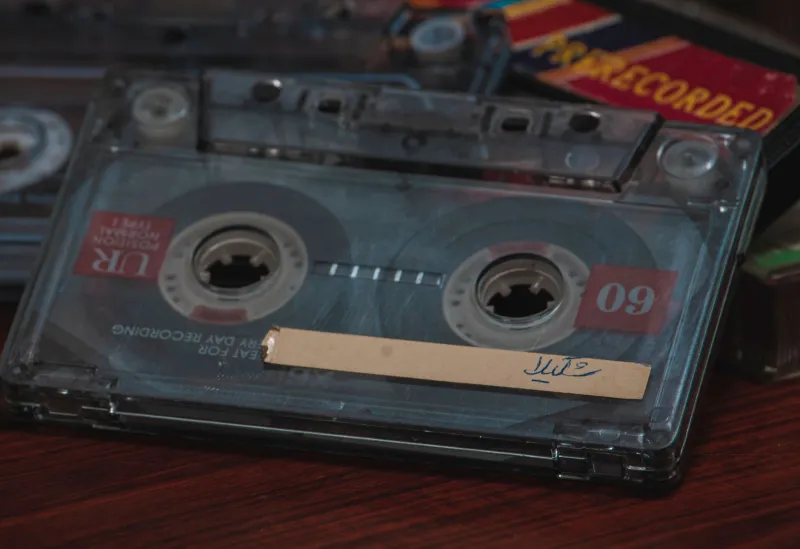
There is a particular moment before load-in at a small UK venue. The doors are not open yet, the promoter is behind the bar with a clipboard, and I am standing there with a gig bag and a question. I could send a link. I usually do. But links disappear into inboxes, group chats and the great grey sludge of saved posts. A tape sits on the bar. It has weight. It makes a small sound when you put it down. That is not nostalgia. That is just physics doing some of the introduction for me.
I still assemble a short cassette demo in 2026. Not for every room, not for every promoter, and certainly not because I think we are all about to return to the cassette economy. I do it because three songs on a physical object change the conversation before I plug in. The tape is not the point. The handshake is the point. The tape just gives me something to hand over while the handshake happens.
Three songs is a filter, not a limitation
A C60 gives me plenty of room. I do not use it. Side A gets three songs and nothing else. That is the whole rule. Three songs is enough to show a shape, a voice and a bit of judgement. It is also short enough that someone might actually press play in a car, in a venue office or on a kitchen table between emails.
The first track has to open a room. No slow fade-in, no atmospheric build that needs six minutes of context. If the first ten seconds do not tell a promoter what kind of night this is, the track does not belong there. The second song is the one that shows I can write something people might hum without realising. The third is the one that sounds most like me, even if it is the least commercial of the bunch. That balance matters more than running order perfection. A demo is not an album. It is a calling card with a pulse.
What earns a place on side A
I keep a short list of things that get a song onto the tape. It has to work on laptop speakers. It has to survive a car stereo. It has to make sense without a paragraph of explanation. And it has to be finished enough that I am not apologising for it while someone is listening.
What gets left off is usually more revealing. I leave off the newest song if it has not settled. I leave off the cover unless the cover is genuinely part of the story. I leave off anything that needs a band to make sense if I am handing it to a promoter who might only have a solo slot. I leave off the six-minute one, even when I love the six-minute one. And I leave off anything that sounds like a studio record when the live show is still a person, a guitar and a room. A demo should sound like a door opening, not a finished building.
The object, the cost and the QR-code compromise
Short-run duplication in the UK is not expensive if you keep it modest. For 25 to 50 tapes, I am usually looking at a few pounds per copy all in, depending on shells, labels, cases and postage. It is not an investment. It is a marketing spend that happens to fit in a jacket pocket. I use basic ferric tapes, clear cases and labels I can write on. Nothing about this needs to be deluxe. In fact, deluxe is a problem. If it looks too precious, people feel obliged to keep it rather than play it.
The QR code is where I compromise. I print a small sticker for the case or add a code inside the J-card. It links to a simple page with the three songs, a few live dates and an email address. That is useful. But I do not pretend it is the main event. A QR code is a bridge, not a replacement. The tape has to work if the code is smudged, if the scanner is playing up, or if the promoter is standing in a cellar with no signal. So the phone number goes on the sleeve in pen. One number, legible, no clever typography. The old format does not need a new layer of mystery.
Handwritten sleeve notes, but not too handwritten
I write on every sleeve. Name, date, three song titles, one phone number and a line about where it was recorded. That is it. I have seen beautiful handwritten sleeves that look like artefacts from a private museum. Mine look like a note left on a kitchen table. That is the point. I want the promoter to think, this person is organised enough to label a tape and human enough to write my name on it. I do not want them to think, I must not damage the artwork.
If I am handing it to a specific person, I put their name on it. If I am posting it, I include a one-line note that says what it is and why I thought of them. No life story. No press release folded into the case. The tape should do the talking once it is in the deck, and the sleeve should do the admin.
The handover is the whole trick
Timing matters more than the tracklist. Do not hand someone a tape during soundcheck. Do not hand it over while they are carrying a monitor. Do not stand there watching them put it in a bag. The best moment is usually after soundcheck, or at the end of the night when the room has emptied out and everyone is too tired to be polite. I say something like: I brought a tape, three songs, my number is on the sleeve. No pressure. Then I leave it alone.
The etiquette is simple. One tape per room. Do not hand them out like flyers. Do not leave a stack on the merch table. Do not follow up by text if you have only just met. A short email a week later is fine. And do not make the tape a gift that requires a thank-you. It is a tool. If it gets played, great. If it sits in a glovebox for six months and then gets played on a drive to a festival, even better. If it never gets played, it still did its job as an introduction.
Why I still bother
A link is a promise. A tape is a thing. In 2026, that difference is worth about three quid and a Sharpie. It will not replace the live show, the email or the actual songs. It will not make a bad night good. But it gives a promoter something to hold while they decide whether to answer your message. It says you understand that attention is short and that a ninety-minute set is a big ask. Three songs is a smaller ask. One phone number is smaller still.
I keep three in the gig bag. If you see me at a venue, ask for one. I will probably have a pen somewhere too.