The Second Set Nobody Rehearses For: Seven Merch Table Lessons From the Far Side of the Room
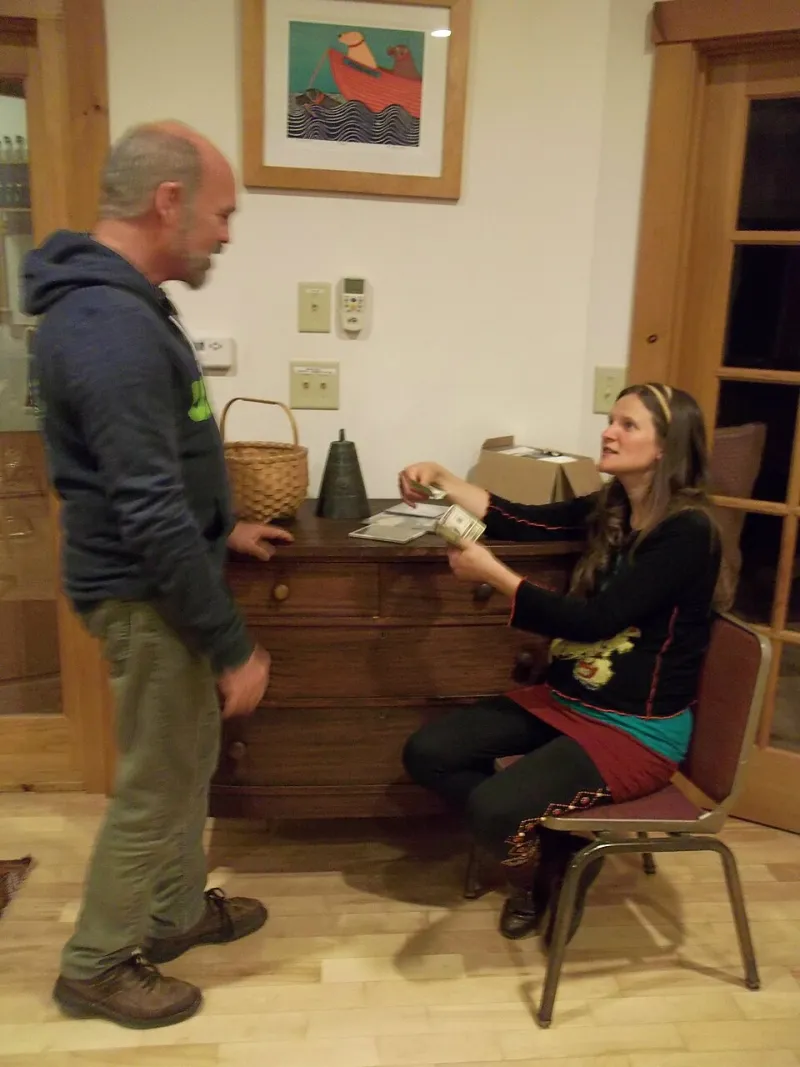
Photo: Artaxerxes, CC BY-SA 4.0, via Wikimedia Commons
There's a moment, about ninety seconds after the last chord, when the adrenaline leaves and you're standing in a room that suddenly smells of spilled lager and damp coats. The venue wants you gone by eleven. Your gear is in a heap by the fire exit. And somewhere near the door there's a wobbly table with a bin bag of shirts under it.
That table is the second set. Nobody rehearses for it, everyone plays it, and it's the one that decides whether the next gig in this town has forty people in or fourteen.
Here's what seven years of standing on the wrong side of that table has taught me.
1. Set it up before the doors, not after the applause
The temptation is to treat merch as an afterthought — sling the bag down at 9:55 and hope. But the people who buy are often the ones who arrive early, stand near the front, and leave straight after your last song because they've got a train. If your table doesn't exist until you're finished, you've already lost them.
Get it set up half an hour before doors. Somewhere with a wall behind it if you can, near the exit but not blocking it, and ideally under a light that isn't a flickering beer sign. Bring a cloth for the table — a black sheet from a charity shop costs three quid and lifts the whole thing from 'car boot' to 'deliberate'.
2. Price in round numbers and stop apologising for them
Twenty quid for a shirt. Twenty-five for a shirt and a tote. Five for a sticker pack if you've got them, and don't bother with anything under a fiver unless it's a badge, because the maths on small items is brutal once you've paid for the print run.
Say the price once, clearly, and then say nothing. The apology — 'sorry, they're, er, twenty, we had to put them up because of the printer' — is the thing that kills the sale, not the number. Nobody in a UK venue in 2026 is shocked by a twenty-pound T-shirt. They're shocked by a performer who seems embarrassed to be selling one.
Have a card reader. Have forty quid in fives for cash. Have a note on the table that says card and cash, because otherwise you'll answer that question sixty times.
3. Stand up
Sit behind a merch table and you become furniture. Stand, and you become a person at a party who happens to have some shirts. It sounds daft, and I resisted it for ages because my legs were tired, but the difference in the number of conversations is not subtle.
Stand slightly to the side of the table rather than behind it, if the room allows. Behind the table is a shop counter. Beside it is a chat.
4. The question beats the pitch
I have never once sold a shirt by saying 'we've got merch, if anyone's interested.' I have sold a fair few by asking, 'Which one brought you down tonight?'
That's it. That's the whole technique. Ask about them, listen to the answer, and let the shirt sit there quietly doing its own work. If they want it, they'll ask. If they don't, you've had a nice chat with someone who likes your songs, which is not a bad return on ninety seconds.
The hard sell doesn't just fail, it actively costs you. People remember being cornered. They don't remember being asked a question.
5. Sizes are a demographic, not a detail
Small, medium, large, and then a long pause while someone holds up an XL against themselves and looks at you like you've personally insulted their shoulders.
Order in roughly this ratio: more larges and extra-larges than you think, fewer smalls, and always a couple of XXLs. If you're doing a first run, thirty shirts split three ways will teach you more than any spreadsheet. Keep a tally on the night — one mark per size sold — and you'll know exactly what to order next time instead of guessing and eating the leftovers for two years.
6. Some people are buying a conversation
The person who talks to you for twenty minutes about the time they saw your support act in 2019 and never buys anything is not a failure. They are the front row at the next gig, and they'll bring someone.
I've had people come back a year later, buy two shirts, and say 'I talked your ear off last time, sorry about that.' They remembered. That's the whole point of the table — it's a low-stakes room where somebody who liked a song can find out whether you're a decent human being. The shirt is almost incidental.
Be generous with the free sticker. Be generous with your time. Save the impatience for the load-out.
7. Write it down the same night
Before you get in the car, write three lines in your phone: how many sold, what people asked for that you didn't have, and one name you want to remember.
That last one matters more than the first two. The tally tells you what to print. The name tells you who to message when you're back in town. Mine currently reads: 'Danny — Leeds, wants the vinyl, works at the Brudenell, say hello next time.' That's a ticket sale and a shirt and probably a pint, all from a note I'd have forgotten by Wednesday.
The set is what you rehearsed. The table is what you build on. Treat the second one like it matters, because in about a year's time, it will be the reason the room is fuller.