One Socket, Nine Songs and a Man Selling Candles: Field Notes From the Christmas Market Circuit
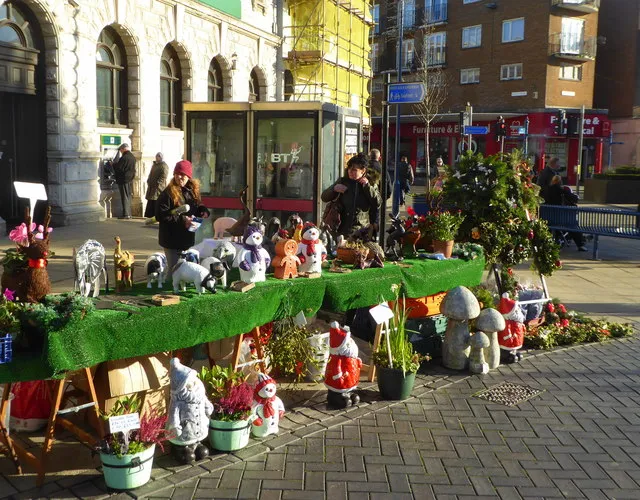
Photo: pam fray , CC BY-SA 2.0, via Wikimedia Commons
The first rule of the Christmas market circuit is that nothing is a gig. It's a lights switch-on, a market stage, a gazebo with a generator, a corner of a square where the council has put a bit of tinsel on a bollard. The second rule is that you will be asked to play 'something Christmassy' by a man in a fleece. The third rule is that there is one socket.
The Single Socket Is the Whole Show
There is always one socket. It is usually behind a stall selling wooden toys, and it is usually already powering a string of lights, a card reader and a small heater. You will bring a four-way extension lead. You will tape it down. You will spend ten minutes explaining to a stallholder that you are not going to blow the fuse. You will then blow the fuse. This is normal. Bring gaffer tape, a spare fuse, and a torch. The torch is for looking into the dark corner where the socket lives. The spare fuse is for the look on the stallholder's face.
Frozen Fingers Are a Technique Problem
You can't play guitar with frozen fingers. You can try. You can do that thing where you blow on them between songs and make a joke about being a brass monkey. But the tuning will drift and the barre chords will turn into a suggestion. My kit list for December is blunt: fingerless gloves with the tips cut off, hand warmers in the pockets, a thermal mug of tea that I don't drink because it's too hot and then too cold. I also bring a second jumper. Not for me. For the guitar case. It doesn't help, but it feels like solidarity.
The Candle Man Is Part of the Mix
At one market, the stall two feet to my left was a man selling candles. He had a little sign that said 'hand-poured'. He also had a habit of shouting 'three for a tenner' every time I started a quiet song. The first time, I was annoyed. The second time, I realised he was doing the job I should have been doing. He was engaging the passing crowd. He was creating a bit of theatre. By the third song, I'd started timing my intros around his shouts. It became a duet. I'd say, 'This one's about a bus,' and he'd say, 'Three for a tenner.' Honestly, it worked.
Reset Every Eight Minutes
The thing about a Christmas market is that the audience is not an audience. It's a river. People come in, buy a bratwurst, listen to half a song, and drift off towards the lights. You have to reset every eight minutes. That means no long intros, no obscure album tracks, no 'this next one is a slow one'. You play the hook, you play the chorus, you say the name of the song, and you move on. I plan a setlist in eight-minute blocks. Block one: two upbeat songs and a Christmas standard. Block two: repeat with different songs. Block three: repeat. If someone stays for the whole thirty minutes, they've heard the same energy three times. That's fine. They've also heard nine songs.
The Setlist That Works
My Christmas market setlist has nine songs and no surprises. It opens with something that has a tambourine on the recording and a shuffle you can clap to. It goes into a cover that everyone knows but nobody admits to liking. It does a new song in the middle, when the crowd is at its thickest and most forgiving. It ends with the one that has the big 'hey' in the chorus, because the 'hey' is the only thing a passer-by can learn in four seconds. I don't play anything that needs silence. Silence is a luxury of indoor rooms with doors.
What to Bring
A four-way extension lead. Gaffer tape. A spare fuse. A torch. Fingerless gloves. Hand warmers. A thermos. A bin bag for the rain cover that you'll fashion out of a bin bag. A second pair of socks. A sense of humour. A setlist taped to the floor, because the wind will take it otherwise. And a pen to write down the name of the stallholder who let you use their socket, because you will want to thank them next year.
Why I Keep Saying Yes
It's chaotic. It's cold. The PA is usually a mystery and the monitor is usually a mistake. But there's something about playing to people who didn't plan to watch you. They're not there for the gig. They're there for the lights, the mulled wine, the chance to buy a candle. And then they stop. They listen to a chorus. They clap. They move on. That's a different kind of audience, and it keeps you honest. You can't rely on atmosphere. You have to make it in eight minutes, with one socket and a man shouting about candles. That's the whole job, really.