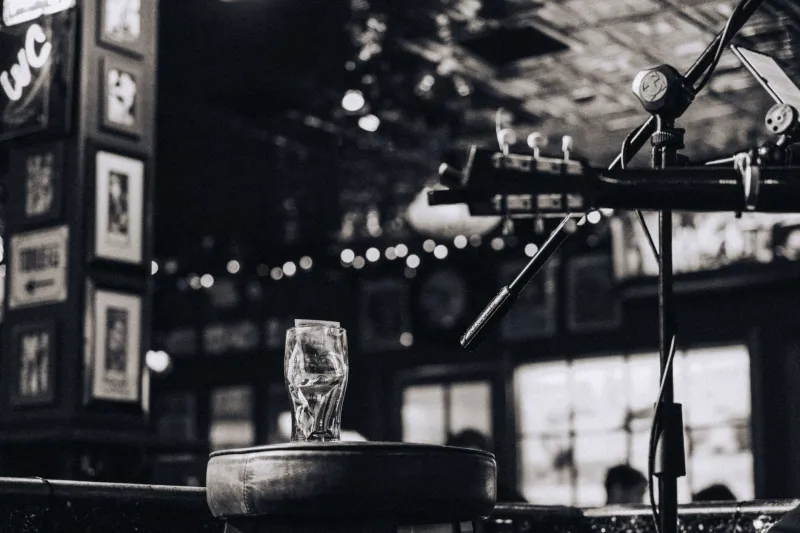
Borrowed Backline, Borrowed Room: Nine Things Thirty Support Slots Taught Me
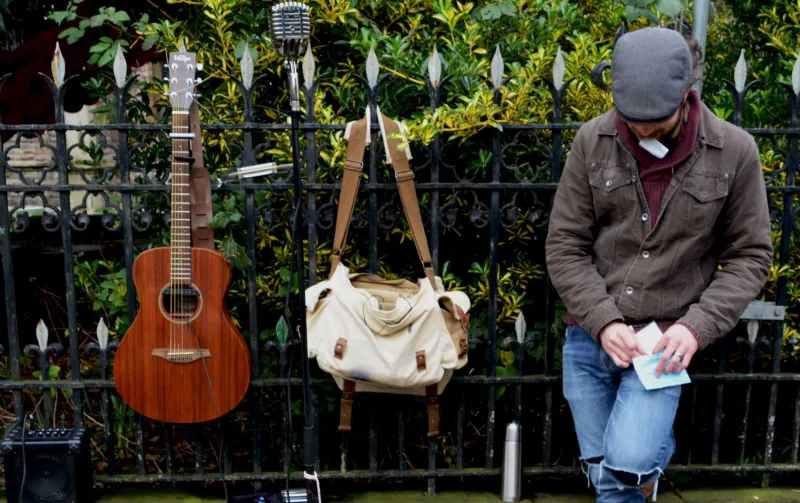
I have opened for people in rooms with carpets that smelled of old beer and rooms with a proper stage door and a rider that included fruit. Thirty support slots, give or take. Some were brilliant. Some were the aural equivalent of standing in a bus shelter while someone explains their podcast to you. All of them taught me something, usually at volume.
The support slot is a strange job. You are not the reason anyone bought a ticket. You are the thing between the door opening and the thing they actually came for. That is not an insult. It is a brief. And like any brief, you do better when you understand it.
The First Half-Minute Is a Handshake, Not a Speech
You have roughly thirty seconds before a room decides whether to keep looking at you or go back to their phone. Do not spend that half-minute explaining who you are, where you have come from, or what the next song is about. Play. Play the most immediate thing you have. A hook, a riff, a line that lands. The introduction can come later, once they have a reason to care.
I learned this the hard way in Leeds, opening for a band whose crowd was very much in the room but very much not in the mood. I said, "We're going to start with a slow one." I watched the room fold its arms. Slowly. Audibly. Now I start with the one that makes the bar staff look up.
The Person Behind the Desk Is Your Co-Performer
Every support act has a favourite sound engineer. Mine is the one who listened to my two-minute line check, asked one good question and made the room sound like a room rather than a fridge. Treat that person like the headliner they are. Learn their name. Say thank you. Do not tap the mic and say "is this thing on?" into a working microphone.
You are not there to test them. You are there to make their night easier. A quick, clear line check and a bit of manners will buy you more goodwill than a pedalboard worth more than your car.
Borrowed Gear Is a Trust Exercise
A borrowed backline is not a freebie. It is someone's livelihood sitting on a stage you have been allowed to use. Put the amp back where you found it. Coil the cable properly. Do not leave a drink on the speaker cab. Do not turn anything up past where you found it and then wander off.
I once watched a support act treat a hired bass amp like a rented mule. The headline bassist said nothing. He did not have to. The room went quiet in that specific way that means someone has just been crossed off a list they did not know they were on.
Play the Room You Have, Not the One You Rehearsed
Twenty-five minutes in a cold room with a chatty back bar is not the same as twenty-five minutes in a warm room with a listening crowd. If they are talking, do not get louder and angrier. Get more interesting. Pull them in with the quiet bit. Make them lean. A support set is a conversation you are trying to start, not a lecture you are trying to finish.
Hostility Is Usually Just Impatience
A crowd that came for someone else is not automatically hostile. They are impatient. They have paid to see a band and you are not that band. Do not take it personally. Do not make a speech about "give us a chance". Just be good, be brief, and be gone. The ones who convert will find you at the merch table. The ones who don't were never yours to lose.
Twenty-Five Minutes Means Twenty-Two
Never plan to the wire. A support set runs on other people's time. The changeover is tight, the sound engineer has a job to do, and the headliner has a show to get on with. Build in a buffer. If you have twenty-five minutes, write a twenty-two-minute set and learn how to cut the last song without crying. The best compliment you can get as a support act is the headliner going on early because you left the stage ready.
The Merch Table Is Not a Personality Test
You do not have to be a natural seller. You just have to be findable. Stand near your stuff, look approachable, and know your prices. Do not deliver a TED talk to someone who just wanted a sticker. A nod, a thank you and a card is enough. If someone says they loved the set, believe them. If someone says nothing, that is fine too. They are here for the headliner. So were you, once.
Watch the Headliner Like a Fan, Not a Rival
Stay for the set. Not because it is polite, though it is, but because you are in a room with people who are better than you at something. Watch how they handle a quiet crowd. Watch what they do between songs. Watch how the sound engineer responds to them. You will learn more in forty minutes of attentive watching than in a week of scrolling through forums about what gear to buy.
Pack Down Like a Guest
Leave the room as you found it, or better. Take your rubbish. Thank the promoter, the bar staff, the sound engineer and the person who let you use their amp. Do not block the exit with your guitar case while the headline set is happening. Do not do that thing where you stand at the back talking loudly about your next gig.
Thirty support slots have not made me an expert. They have made me a better guest. And that, it turns out, is most of the job. The rest is just showing up, playing the good song first, and remembering that the person behind the desk has ears too.