Dead Air, Live Room: Notes on the Bit Between the Songs
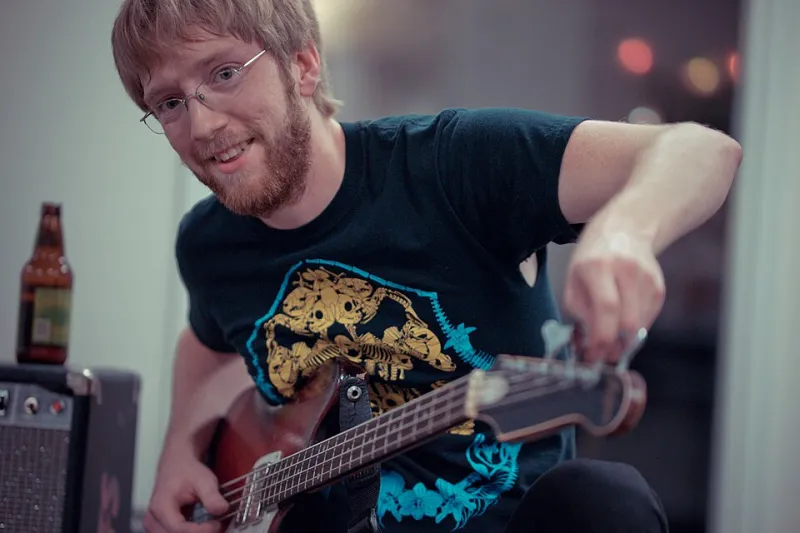
Photo: Nan Palmero from San Antonio, TX, USA, CC BY 2.0, via Wikimedia Commons
There is a particular sound a small room makes when the applause stops and the microphone is still hot. It is not quite silence. It is the fridge behind the bar, a chair leg, someone laughing at a phone. And it is your job, for a second or two, to decide whether to fill it.
I have filled it badly. I have filled it with a story about a parking ticket that had no ending. I have asked a pub back room how everyone was doing and received the sort of look usually reserved for a man explaining his dream. I have also said nothing, retuned, and felt the room settle back into place like a dog on a rug. That last one took years to learn.
Stage patter is not a speech. It is not stand-up. In an 80-cap room, it is closer to joinery. It holds things together while you move a capo, change a guitar, or get your head back into the next song. Done well, nobody remembers it. Done badly, it becomes the thing they remember instead of the set.
The silence is not the problem
Most performers fear dead air more than the audience does. A crowd is perfectly happy with ten seconds of quiet if they can see you are doing something. Tuning is allowed. Changing a harmonica is allowed. Taking a breath is allowed. What they do not enjoy is the sound of someone panicking into a microphone.
In 2026, rooms are less forgiving of filler because there is so much of it everywhere else. People have paid ten quid, stood on a sticky floor, and given you their evening. They will forgive a bum note. They will not forgive being talked at while you find your confidence.
If you have nothing to say, the honest move is to say nothing. Nod at the room. Tune the third string. Let the pause do its work. A between-song silence can feel enormous from the stage and completely normal from the floor. That gap between what you feel and what they see is where most patter goes wrong.
What the between-song bit is actually for
When I am putting a set together, I only give patter a job if it has one. It needs to do at least one of these things:
- cover a practical change, such as a capo move or a swap to a different guitar;
- reset the mood, usually by pointing the room towards the next song rather than away from the last one;
- give one sentence of context that makes the song land better;
- thank the room without turning it into an acceptance speech;
- buy back attention after a song that asked a lot of people.
That is roughly it. Patter is not there to prove you are a personality. It is there to keep the set moving. Once I stopped treating it as a performance in its own right, it got shorter and better.
Three lines that tend to do a job
I do not carry a script. I do carry a few shapes of sentence that I know will work if the wheels come off.
One is the practical heads-up: 'This next one needs a capo, so I am going to fiddle for a second and you can pretend you are watching a craftsman.' It admits the pause, gives the room permission to wait, and usually gets a small laugh because it is true.
Another is the quiet reset: 'This is a slower one. If you are at the bar, this is your last chance to get back before the room goes all candlelit.' It is not clever. It just tells people what is coming and stops the next song from feeling like a ambush.
The third is the honest exit line: 'That was one about the end of something. This is one about the middle. Same three chords, different regret.' I like that shape because it does not over-explain. It gives the room a handhold and then gets out of the way.
None of these are gold. That is the point. They are reliable, short, and they sound like a person talking rather than a host reading a menu.
The disasters are usually length, not content
I have seen good lines die because they were followed by four more. A joke lands, then gets explained. A story about the song becomes a story about the story. The room laughs once and then politely waits for the guitar to start again.
I have also made the classic mistake of asking a question too early. 'How is everyone doing?' in the first thirty seconds of a support slot is a coin flip. In a half-empty room on a Tuesday, it can land like a wet tea towel. Better to give them a song first. Then they know who you are and what kind of night it is.
The other disaster is the local reference that assumes too much. A quick line about a town can be lovely if you have actually been there. It can also sound like a bloke reading from a tourist leaflet. In UK venues, the safest local material is usually the room itself, the weather, the last train, or the fact that everyone is standing in a slightly odd space that was probably a storage cupboard in 1987.
The case for saying less in 2026
I have been doing this long enough to remember when between-song chat was almost a separate act. Some performers could hold a room for five minutes with nothing but a story and a capo. A few still can. But most of us are not that person, and most rooms do not need it.
In 2026, the small gig is a fragile thing. People are distracted, tickets are tight, and the difference between a good night and a forgettable one is often momentum. Long patter breaks that momentum. Short patter protects it.
My rule now is simple: one idea, thirty seconds, then play. If I cannot say it in one breath, I do not say it. If I am not sure whether it is funny, I leave it out. If the room is quiet in a good way, I do not rescue it.
A small system that helps
Before a show, I write down three anchors and nothing else: an opening line, a mid-set reset, and a closing thank-you. The rest is room-dependent. I also note the two songs that genuinely need an introduction. Everything else can stand on its own.
After the set, I listen back to a phone recording. Not to judge the singing, but to hear the gaps. I ask myself which bits I would skip if I were in the audience. The answers are usually obvious. The story I thought was charming is often forty seconds too long. The line I nearly cut is often the one that bought the room back.
The between-song is part of the craft, but it is not the main event. It is the hand on the door, the pause before the next thing. If you have something useful to say, say it. If you do not, tune up, nod, and let the room breathe. In most UK venues, that is the best patter of the night.