Two Chords and a Hum: Reading a Room Before the Doors Open
The riff that never gets a name
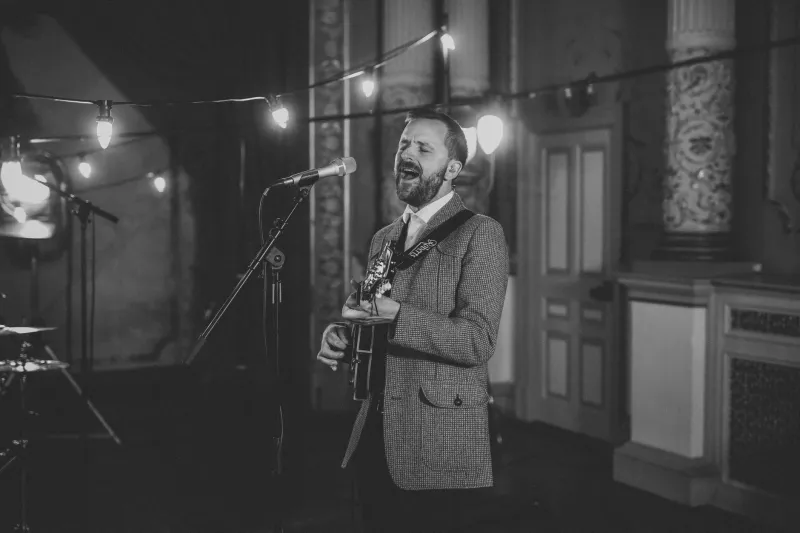
The first thing I play in any room is not a song. It is a reflex. A lazy D-to-G thing, hummed over the top, played with the pad of my thumb rather than a pick. Sometimes there is a mumbled line about nothing in particular. Sometimes there is a tap on the snare that is not quite a beat. It lasts about forty seconds, and then I stop, lean into the mic and say something deeply profound like, 'Alright, that's working.'
It is not working. It is a question. And the room always answers.
I have been playing this throwaway riff since a support slot in 2019, when a sound engineer with a face like a wet weekend told me to 'just play anything' while he sorted a feedback problem. I played two chords and a hum. He fixed the problem. I have been using it ever since.
What the walls say back
Every room has a tell. The first two chords find it. In a carpeted function room above a pub in Leeds, the sound drops off the back wall and lands in a soft heap somewhere near the fire exit. In a converted church with high ceilings, the same two chords keep going, bouncing off stone and arriving back at your feet a half-second late. In a modern arts centre with acoustic panels and good intentions, the sound is almost too tidy — you hear yourself clearly and it is deeply unnerving.
The throwaway riff is not a song, so it does not distract me. I can hear the room rather than the material. I can hear the low-mid build-up near the bar, the flutter echo in the corner by the toilets, the dead spot that will swallow the acoustic guitar entirely if I stand two feet to the left. I can hear whether the PA is flattering the room or fighting it. Most of all, I can hear whether the room wants to be played or wants to be managed.
The people in the room before the people
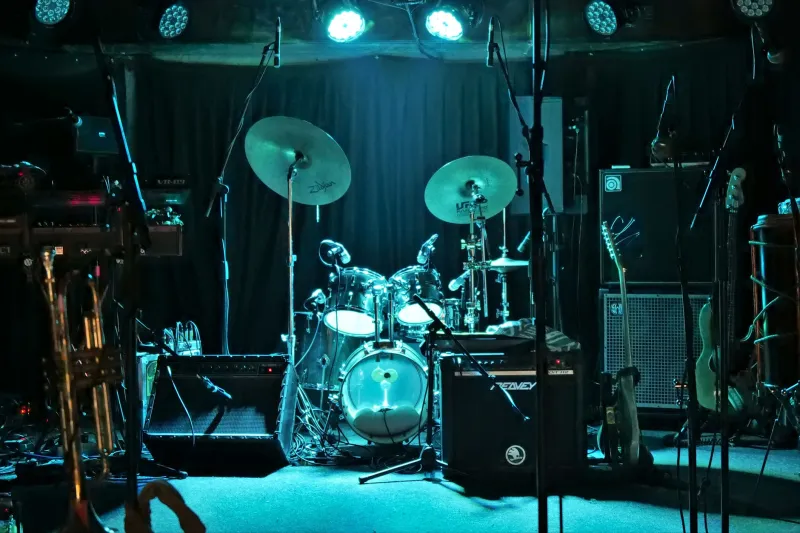
Soundcheck is not empty. It is full of people who are not there for the gig. The bar back stacking glasses. The duty manager with a clipboard. The sound engineer who has heard this exact riff from a hundred acts and is still, somehow, not impressed. The cleaner who is hoovering with a look that says 'I have been here since six this morning'.
And the room has its own rhythm before anyone arrives. The cellar fridge hums in B flat. The coffee machine hisses. A door somewhere bangs in the wind. You learn to play around these things, or you learn to accept that they are part of the set. The throwaway riff tells me whether the staff are relaxed or tense, whether the promoter is worried about the neighbours, whether the sound engineer is going to be an ally or a wall.
The neighbourhood test
The sound limiter is the first thing I look for. Not because I am afraid of it, but because it tells me what kind of room I am in. A limiter set at 93dB with a traffic light display is a room that has had complaints. A limiter set at 102dB with a broken light is a room that has given up. And no limiter at all, in a room with single-glazed windows and terraced houses forty feet away, is a room that is asking for trouble.
I play the riff a little louder after the first chorus that never comes. I watch the promoter. I watch the bar staff. I watch the window. If nobody flinches, I know I can push. If somebody does, I know the shape of the night before the first ticket is scanned. It is not a perfect test. It is an honest one.
The audience arrives before they arrive
The first person through the door during soundcheck is usually the one who has driven two hours, or the local who knows the landlord, or the friend who has come early to hold a table. They hear the throwaway riff. They do not know it is a throwaway riff. They think it is a song. They nod along. They ask what it is called. I say I do not know yet.
Their reaction is often the most honest of the night. A room that ignores the riff is a room that will need winning over. A room that looks up is a room that is already listening. I have played the same two chords in a hundred venues and the response has told me more about the night ahead than any pre-gig pep talk ever has.
What I take home from a song nobody hears
The throwaway riff is not on any setlist. It has no title, no lyrics worth writing down and no future. But it is the only time all night when I am not selling anything. Not a ticket, not a T-shirt, not a version of myself. It is just me and a room, asking a question.
I have tried to turn it into a song. It never works. The minute I give it a chorus, it stops telling me the truth. So I leave it alone. It stays in the soundcheck, where it belongs, doing the most useful job of the night.
The most important song is often the one nobody paid to hear. I play it every time. I still do not know what it is called. I hope I never do.