When the Last Train Edits Your Encore
There is a version of setlist planning that happens at the kitchen table. It involves careful sequencing, a sensible arc, maybe a new song given room to breathe, and an encore that feels earned rather than bolted on. Then there is the version that happens when you check the train times and realise the 23:14 is the only sensible way home.
The gap between those two documents is where most of my live decisions now live. Not because I am especially disciplined, but because missing the last train turns a good gig into an expensive, slow-moving problem. A setlist is not just a list of songs. It is a plan for a room, a clock and a journey. In the UK, that journey has a habit of making itself heard.
The Timetable Is Part of the Arrangement
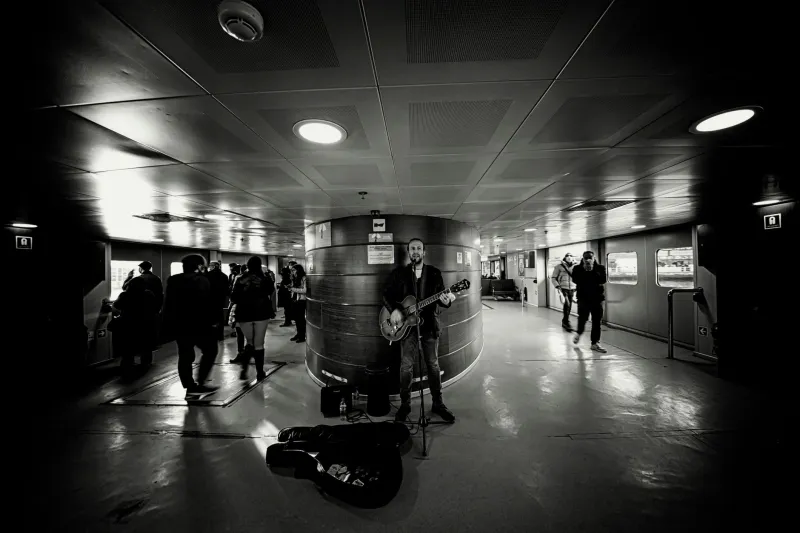
I used to think of travel as admin. Book the ticket, check the venue address, find out where the loading bay is, done. Now I treat it as part of the arrangement. A curfew is not just venue policy; it is a hard edit. A last train is not just transport; it changes what an encore can be. Even the walk from the stage door to the platform matters, especially when it is raining and the guitar case has decided to become a sail.
This autumn I played three very different nights in three very different rooms. A city club, a small town arts centre and a support slot. On paper they had little in common. In practice, the same question shaped all three: what time does the room stop being mine?
City Club: The Encore That Became a Bridge
The city show was a Leeds club night, the kind of room where the bar is loud until the first chorus and then suddenly everyone is listening. Stage time was 9:45. Curfew was 11. My last train was 23:14, which sounds generous until you factor in packing down, saying three goodbyes and walking briskly with a guitar on your back.
I had planned a two-song encore. By 10:35 the crowd was warm and the band was playing well, and the obvious thing would have been to run the full plan. Instead I moved the slower song earlier in the set and kept the bigger one for the end of the main set. The encore became one short song, then a quick thank-you. We were off at 10:52. It felt slightly abrupt from the stage, but the room had already had the good bit.
The song I left in the case was a longer, moodier piece that needs a quiet audience and a confident ending. It is a great song for a 10:20 set. It is a terrible song for a 10:52 set when the last train is already appearing on the departure board in my head. The travel edit did not make the show worse. It made it tighter. The encore became a bridge back to the first song rather than a second victory lap.
Small Town Arts Centre: One Bus, One Piano, No Margins
The arts centre date was the opposite problem. Lovely room, seated audience, a piano that had seen better decades but still had character. The sound curfew was 22:30 and the last bus was 22:40. Not the last train. The last bus. Which is a different kind of pressure because buses do not wait and rail replacement coaches do not care about your artistic journey.
I had planned 70 minutes. I played 58. Two songs went entirely, and one got shortened by a verse. The songs that went were the ones with long tuning changes and a new one that needs a room to settle. In a seated arts centre, people are polite enough to sit through a retune. They are less polite when the performer is visibly doing mental arithmetic about a bus stop.
The closer changed too. I swapped a big, slow-building ending for something shorter and more direct. It was not the finish I had imagined, but it was the right finish for the night. The promoter noticed. The audience, mostly, did not. That is the job, really. You make the compromise invisible and keep the good songs in the room.
Support Slot: The Clock Is Someone Else's
The support slot was in Birmingham, 30 minutes, changeover already tight, headline act waiting. My last train was 22:03. There was no encore question because there was no encore. Support sets are not mini headline sets. They are a different shape entirely: fewer pauses, faster changes, a bit more front-loading, and no long story that you cannot cut if the sound engineer gives you the look.
I built two versions of the setlist: a 30-minute one and a 25-minute one. I soundchecked with the shorter version in mind. On the night I played 27 minutes, dropped one song and kept the between-song chat to a minimum. It was the most disciplined I have been on stage all year, and the travel deadline was only half the reason. The other half was that a support slot asks you to be a guest in someone else's evening. The timetable just makes that clearer.
What Gets Left in the Case
Across those three nights, the same songs kept getting cut or moved. Long intros. Anything that needs a full retune. New songs that have not yet earned their silence. The second encore. The quiet song that works beautifully in a listening room and badly in a room where the last train is calling.
I do not think of this as artistic cowardice. A live set is a negotiation between the songs and the circumstances. The travel deadline is one of those circumstances. It sits alongside the sound, the audience, the room and the promoter's watch. The trick is to make the negotiation before you walk on stage, not halfway through the closer.
These days I write the setlist with the journey home already on the page. I know which song is the flex, which one is the fixed point and which one I can lose without derailing the night. By the time I get to the venue, the last train has already had its say. It is not the collaborator I would have chosen, but it is the one that keeps turning up.